

When it comes to the longer telephoto ranges, even Micro Four Thirds lenses can still be big, and not everyone needs — or can afford — the full reach of an OM System 150-400mm f/4.5. OM System has a couple of 40-150mm lenses in various sizes, and they have longer zooms up to 300mm with slow apertures. The time is ripe for something in the middle, and that’s where the 50-200mm f/2.8 IS Pro comes in; but it will cost you $3,699.
OM System 50-200mm f/2.8 Zuiko Pro IS Review: How It Feels
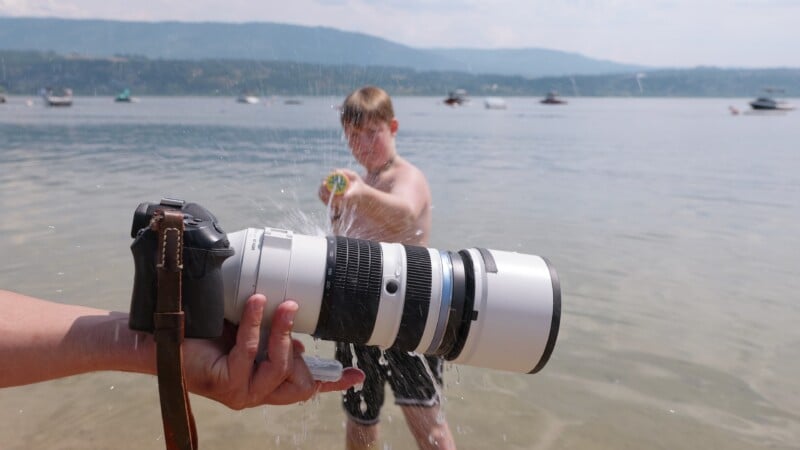
Unlike the more affordable and slower zooms, or even the very professional 40-150mm f/2.8 lens, this new OM System optic looks very snazzy. The white thermal paint, blue metal bezel, and black focusing and zoom rings give it a very contrasty and eye-catching panda-esque look. The lens only weighs about 38 ounces (1,075 grams), which makes it feel similar to a lightweight full-frame 70-200mm f/2.8 lens. The front of the lens is fitted for 77mm filters and is surrounded by a push-button hood with a sliding cut-out for manipulating polarizers. You get a well-damped focusing ring, customizable buttons, and a quick-throw zoom ring as well.


There are all the usual controls that you would expect on a pro lens, such as the focus limiter switch, autofocus controls, preset distance focusing, and image stabilizer controls. This stabilizer promises to work with the IBIS in OM System bodies to give a full seven stops of stability. The tripod collar is fully removable, which is something I really appreciate when keeping weight to a minimum. It is also cut with the appropriate dovetails to work with all Arca-Swiss-style heads. I also love the usual OM System weather-sealing because I know that the lens can go through hell simply based on the excellent reputation that OM System has earned in that regard. That being said, I can also rely on the IP53 rating given to this lens, so I know that it will handle any back-country excursion.


OM System 50-200mm f/2.8 Zuiko Pro IS Review: How It Shoots
The 50-200mm covers a really handy 100-400mm full-frame focal range, which I find very useful for everything from portraits to closer wildlife. 400mm is borderline for more advanced wildlife shots, but the OM System lens also works with the 1.4x and 2x teleconverters. I found the long end of the lens fine for the wildlife I had nearby on a recent camping trip to the British Columbia interior.


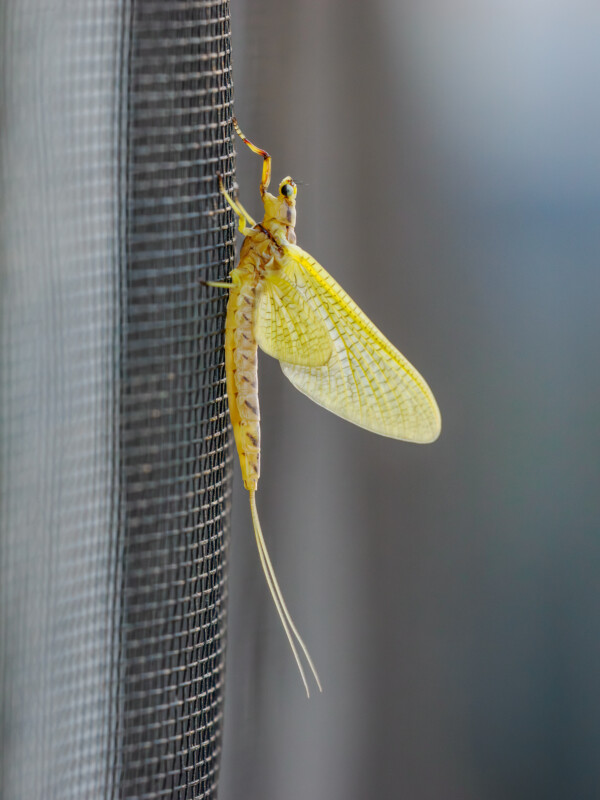
I also had an amazing time getting as close to subjects as possible. The 50-200mm lens has a great ability to give 1:2 life-size macro capabilities, which allowed for some dramatic insect and flower shots. If you use the 2x teleconverter, you can even push it to 1:1. At the 200mm end, there is plenty of working distance, so you don’t have to lie on the ground or scare insects away. I had some of my most enjoyable moments on the trip hunting for these close-up shots.


The autofocusing speed is excellent thanks to the powerful linear actuators inside the lens. There was no pausing or waiting for the focus to acquire my subject and snap to position. The autofocusing speed certainly kept up with whatever the OM-1 II was able to ask for. Using bird detection AF, I was able to track most of the birds I came across, including some particularly small and fast swallows.


Bokeh on this lens is quite beautiful, with the f/2.8 and long telephoto reach allowing for some shallow depth of field. I liked the lens around the 50 to 85mm range to shoot portraits of people, and in wildlife situations, the backgrounds have a soft and pleasant look to them when you push to the extremes of the telephoto range. The nine-bladed aperture inside the lens shows very little cat’s eye effect and provides round and smooth-looking specular highlights. There is a slight soap-bubble effect present in the highlights, however, causing an ever-so-slightly harsh look to some of the out-of-focus areas.



Flare can be an issue with lenses like this, so I tested the lens without a hood on. The OM System lens coatings did a great job of preventing any unsightly flare, and ghosting was also very well controlled. Ghosting did not get any worse either when the aperture was stopped down tightly.

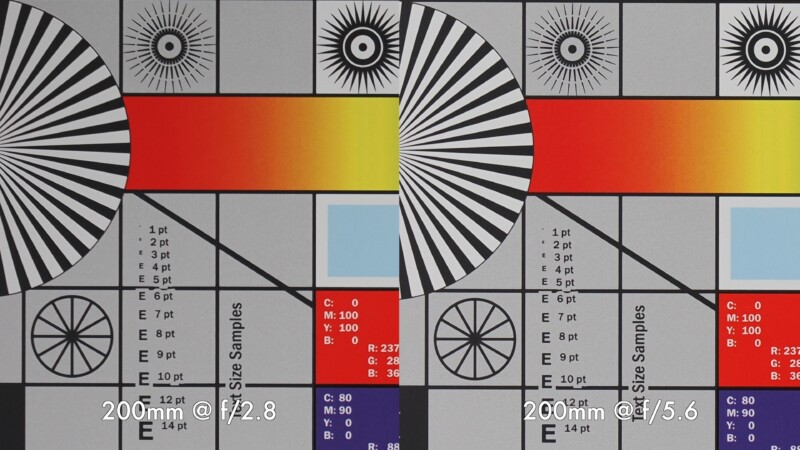
Sharpness is exceptionally good on this lens. The 50-200mm Zuiko is made to shoot wide open, with great detail and sharpness in the center of the image. Corners are also decent, with only a hint of softness at f/2.8. Stopping the lens down by even one stop makes contrast go up, and softness disappear. The lens is also very sharp, shooting at extreme close-up ranges.

OM System 50-200mm f/2.8 Zuiko IS Pro is Excellent, for a Price
OM System absolutely needed a lens like this to provide users with a professional option that features a bright aperture. This is a very professional lens with the versatility to shoot everything from portraits to sports to wildlife. Optically, there is very little to complain about, and a lot to compliment, but all of this quality comes at a price. The $3,699 price is certainly a big ask, but not out of the range of most full-frame telephoto lens options that do a similar thing. If you are serious about shooting professional photography with an OM System body, this lens makes a ton of sense, without having to jump to the very expensive 150-400mm f/4.5 lens.

Are There Alternatives?
OM System has a stable of well-priced telephoto optics, but they generally are quite slow when it comes to light-gathering. The OM System M.Zuiko 40-150mm f/2.8 would be the natural option to get something similar with a bright aperture. It is smaller, lighter, and more affordable, but I wouldn’t consider its telephoto reach as being able to cover wildlife photography.
Should You Buy It?
Yes. With the OM System M.Zuiko 50-200mm f/2.8 IS Pro, you pay a professional price, but you get professional quality. This lens has versatility in spades to help offset its high cost.