

Laowa has made a name for itself by releasing wonderfully weird optics that the major lens manufacturers would never think to produce. Probe lenses, ultra-wides, incredibly bright manual focus lenses, these are the kind of oddities Laowa is best known for. I was, therefore, surprised when they started teasing a 200mm f/2 C-Dreamer professional autofocus lens.
This is certainly not a common lens (although Canon and Nikon both had versions back in the DSLR days), but also one that would require state-of-the-art technology to excel on modern mirrorless bodies.
Further complicating the reception for this lens was the release of Sigma’s spectacular 200mm f/2 DG Sports lens only a couple of months ago. While quite affordable at $1,799 for the EF version and $1,999 for the Sony E or Nikon Z-Mount versions, as Laowa’s first lens targeting professional sports photographers, this lens has a lot to prove.
Laowa 200mm f/2 C-Dreamer Review: How It Feels
Weighing in at around 1,500 grams (3.3 pounds) for the EF version and 1,700 grams (3.7 pouonds) for the mirrorless options, the Laowa is quite compact for a 200mm f/2, although still bulky because of those darned laws of physics. It has switches and buttons for all professional controls, including a focus selector switch, focus limiter, and aperture click toggle.


There is one custom button near the back of the lens and near the front barrel, four more can be found. A generous (but easily scratched) metal hood is included, but it is attached with a tightening screw as opposed to the bayonet locks I prefer. A removable tripod foot can be found as well, thoughtfully cut for Arca Swiss-type quick-release systems, and rotatable with clicks at 90-degree increments. The lens certainly has a professional feel and is sealed against dust and moisture.


The front lens element is massive, requiring the use of rare and expensive 105mm filters. Fortunately, the mirrorless versions of this lens include a nicely-built 43mm rear filter tray, with a dial for rotating polarizers. This is a feature the EF version cannot include, due to the much longer flange-back distance of the mount. It’s worth pointing out that the availability of the EF-Mount version means this lens can easily be adapted to most mirrorless mounts if the one you’re looking for isn’t natively supported.

Laowa 200mm f/2 C-Dreamer Review: How It Shoots
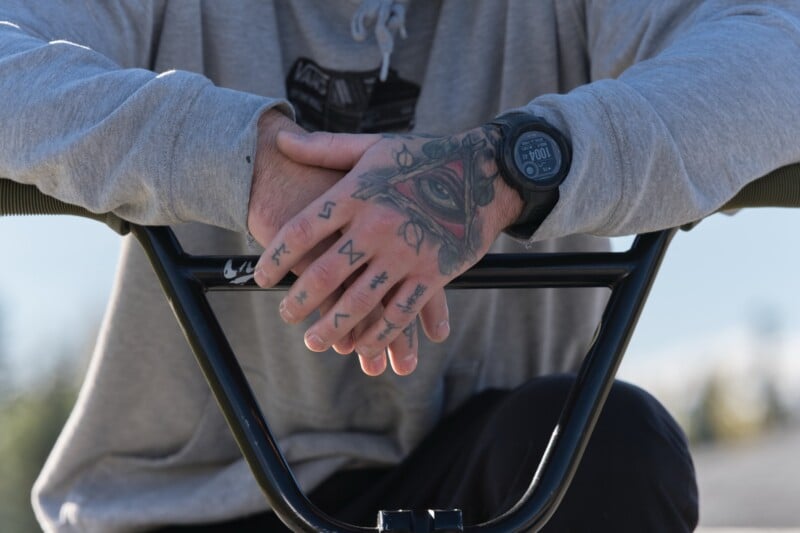
The first thing I wanted to test was the autofocus performance of this lens. I had seen autofocus motors used in Laowa lenses before, but those were ultra-wide lenses. A 200mm f/2 demands extremely fast and precise autofocus performance. For testing, I went out with local BMX rider Devon Riep to see if Laowa’s motors could keep up. My initial impressions were promising, as the lens focuses very quickly from minimum focus to infinity and tracking looked good through the EVF of the Sony a1 II I mounted the lens to.

However on reviewing my images, any time there were sudden speed changes, which happen frequently in BMX, the focus would fall in front of or behind my intended subject. This made capturing tricks a very frustrating hit-or-miss affair. I did not have access to a Canon or Nikon 200mm f/2 DSLR lens for comparison, but having recently used the Sigma 200mm f/2 DG Sports, the Laowa results were much less impressive. If you intend to use the Laowa 200mm for sports, be prepared to overshoot to make sure you have some in-focus keepers.

Looking at image quality, this Laowa optic has truly lovely bokeh. There is a swirly cats-eye look to specular highlights when shooting wide open which I find looks great for portraits. Those specular highlight “bokeh balls” are free of any onion rings and have only a very minor soap bubble effect. This results in truly lovely transitions from in focus to out of focus.


Flare results are interesting. When shooting directly at a large light source at f/2, there is a noticeable loss of contrast across the frame, but very few artifacts. Upon stopping down, contrast improves dramatically, but some small ghosts or blobs of light can often be seen. Simply put, if you want a contrasty image without any artifacts, I would avoid shooting directly into the sun.


Longitudinal chromatic aberrations, or LoCA, are when a color shift can be seen in the foreground and background out-of-focus areas. It can be quite distracting and very difficult to remove in editing. The Laowa 200mm f/2 does exhibit a small amount of LoCA when shooting wide open, but it is relatively minor and will rarely be a cause for concern.


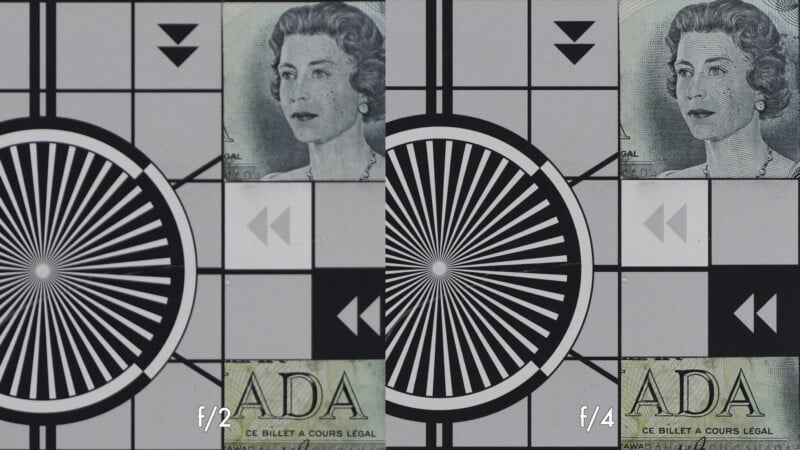
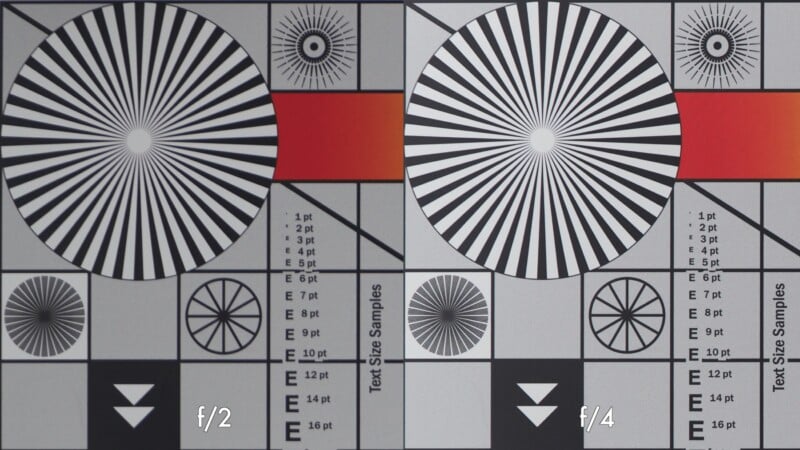
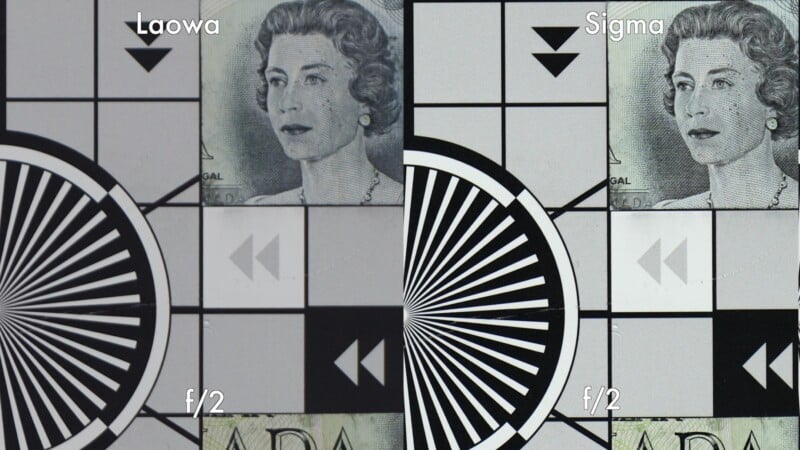
In terms of sharpness, the Laowa reminded me a lot of vintage optics. Shooting wide open at f/2 there is a soft, low contrast haziness across the frame. However, by stopping down to even f/4 sharpness increases dramatically to be tack sharp in the center and corners of the image. Many photographers appreciate the dreaminess that lenses like this can produce when shooting wide open, but be aware that for maximum sharpness, stopping down will be required.
Almost There
Laowa really went for it with the 200mm f/2 C-Dreamer and I applaud them for it. It’s just unfortunate that the prime competition is Sigma’s new 200mm f/2 that borders on perfection. There is a lot to like with what Laowa is offering here, but the weaker than expected performance for action photography does limit the possible use cases for this lens.
Are There Alternatives?
Older DSLR designs of the Canon Nikon 200mm f/2 are still fetching premium prices in the used market. A new copy of the Laowa 200mm f/2 C-Dreamer AF will be substantially less affordable than even a used version of those older optics. However, while I was unable to directly compare them against the Laowa, those older professional lenses are well known for outstanding sharpness wide open, something the Laowa lacks.


The most obvious comparison is the recently released Sigma 200mm f/2 DG Sports ($3,300). While significantly more expensive, the Sigma option is dramatically sharper wide open, less prone to flare and features more dependable autofocus. It is only available in Sony E-Mount and L-Mount, however.

Should You Buy It?
Maybe. A 200mm f/2 can deliver a unique look, especially for portraits. However, the need to stop down for sharp results and inconsistent autofocus means this lens will likely wind up being another Laowa lens for a small niche, rather than a popular choice for sports photographers.