

Fujifilm has a crowded lineup of cameras, which, from an optimistic viewpoint, offers photographers many choices. However, from a pessimistic viewpoint, the degree of choice can be intimidating to beginners. This is part of why it is so important to have a solid entry-level camera to welcome new photographers into the Fujifilm family. For many years, the X-T30 series has served this role well, and now a third version has arrived. Priced at $999, it keeps photography affordable.
The X-T30 design has all the charm and retro-styling that make Fujifilm cameras popular, packaged into a compact and capable little body. However, as great as the design is, it has not changed much from the X-T30 II or even the original X-T30. The major update this time around is the new Fujifilm X Processor 5 and the feature changes it enables. Let’s explore if the changes it brings will be meaningful enough to win over prospective buyers.


Fujifilm X-T30 III Review: How It Feels
So the X-T30 III feels the same as the X-T30 II, and that makes perfect sense considering that they share the same chassis. External dimensions are the same, and the weight is unchanged at 13.3 ounces (378 grams). At the heart of the camera lies the now classic 26-megapixel APS-C sensor that we have seen before.
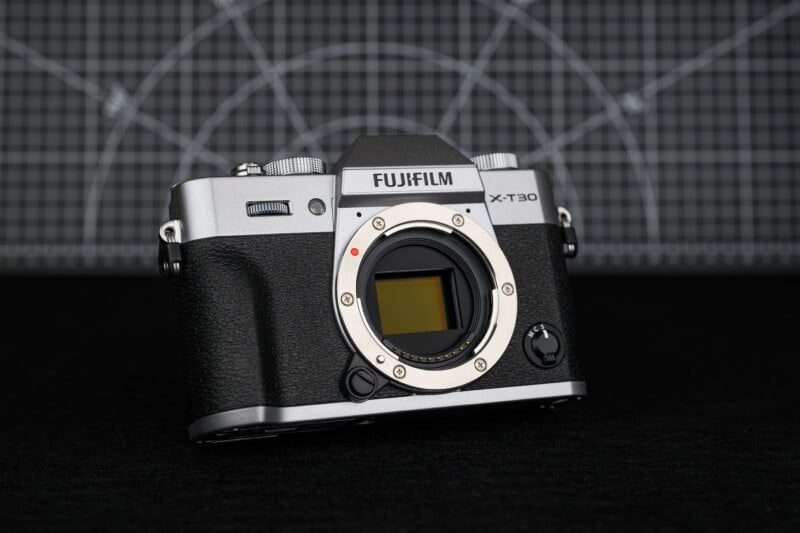

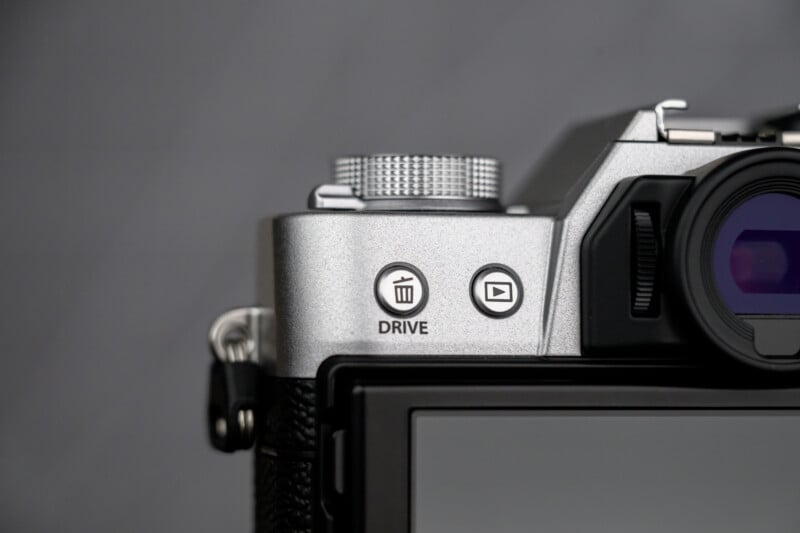
There are a few changes to the controls. The delete button performs double-duty as the drive button again, providing access to different burst rates and the camera’s movie mode. The top-left dial is now a Film Simulation dial, much like what we see on the X-E5 and X-T50 cameras. This gives you hard-locked simulation modes, a custom setting, and three fully customizable film recipes that can be saved.
The X-T30 III has the exact same 2.36-million dot EVF, and the same tilting 1.62-million dot back panel. Everything about the X-T30 III is familiar to its predecessor, which is not a bad thing considering how capable the design is for an entry-level camera. However, it would be nice if the screen fully articulated. There is also the same single UHS-I SD card slot, and the same battery as before. However, thanks to the new processor, the battery life is improved to about 425 shots when in “Economy” mode.


The camera still shoots at a maximum of eight frames per second with the mechanical shutter, which is, by the way, a perfectly acceptable amount. The electronic flash on the top of the camera also returns for round three, and there is the same quick switch to put the camera in full auto mode. The X-T30 III is heavily aimed at beginner photographers, and can automatically choose appropriate camera settings for various photographic situations, as well as the right auto focus scene-detection mode.

Fujifilm X-T30 III Review: How It Shoots
So if almost everything is the same as before, what sets the new X-T30 III apart? More battery life is always nice to have, but the bigger changes come down to autofocus performance and video capabilities. Image quality will be identical to what we’ve seen before, with the only minor difference in image making being the addition of the Reala Ace and Nostalgic Neg Film Simulations.


Autofocus performance is legitimately improved, bringing this camera closer to Fujifilm’s more advanced modern models. You get all the latest subject detection modes, including situations like vehicles and various animals. However, tracking AF is still spotty, and I often find myself resorting to an old-school way of focusing and recomposing for lots of my shots. If the subject is within the detection modes, the X-T30 III performs admirably, and beginners should find the face and eye-detect modes very effective.



Video features can be quite powerful with the X-T30 III, as you get access to 4Kp60 record modes, and both FLog and FLog2 for extra grading room. The main issue is that the body isn’t really designed for video, leading to frustrations.
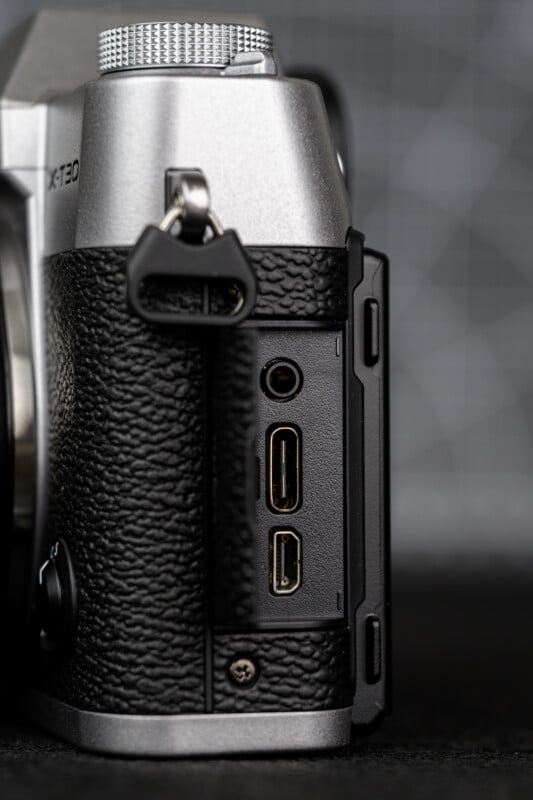
The main issue is the same one that plagued the prior X-T30 cameras. USB adapters are required for headphones, and a 2.5mm-to-3.5mm adapter is needed for mic support. At least you do still get some way of monitoring audio, even if it is a bit of a pain.
We do get access to open gate recording thanks to the new processor. This allows you to shoot in 6K and then crop to either a horizontal or vertical format without having to reorient the camera. Open gate also enables different compositional choices in editing software afterward, and is a nice update to have for videographers. However, the main emphasis of the X-T30 III is still clearly towards photography.


Fujifilm X-T30 III Review: More of the Same
Aside from these relatively minor tweaks, the shooting experience is exactly the same as what’s come before. That’s not necessarily a bad thing, though.
I love the handling of the X-T30 cameras, and the analog command dials, shutter dials, and their customization options make the new camera fun to use and easy to manipulate. If it ain’t broke, don’t fix it.



However, I also can’t help but feel like I’m getting the same camera that I had before, with little more than a firmware update. A better processor is a nice thing to have, but if you are looking for a big jump over the previous camera, you’re going to be disappointed. It does go to show that today’s camera industry is plateauing in many ways when it comes to hardware changes, especially if you are trying to keep a camera affordable.


There is no denying that the third version of the X-T30 is another minor update. But this still doesn’t take away from the fact that the $999 X-T30 III is a fun and affordable shooting experience. Autofocus improvements are always substantial, and the video updates are nothing to scoff at either. If you are looking for an entry-level camera to get into the Fujifilm camera system, the X-T30 III has lots to offer, just like the X-T30 II and X-T30 did before it.
Are There Alternatives?
The Nikon Zfc offers retro-styled good looks, and nice manual controls for a similar price, albeit with less access to APS-C lenses. The Canon EOS R10 is a great camera with a fully articulating screen, and decent lens choices, but is arguably less stylish on the shoulder.
The Fujifilm X-M5 is also stylish with similar performance. It can be a good choice if an EVF is not a major priority.
Should You Buy It?
Yes. It’s more of the same, but the original concept was always a good one and still is. Besides, you can’t hardly beat the price.