

The Leica M-mount is a dynamic arena for third-party lens manufacturers, even though the brand is considered quite exclusive. These prestigious cameras come with huge price tags and the easy assumption would be that Leica users would only stick to Leica lenses. However, as one of the oldest camera manufacturers around, third-party lens makers have been creating for this illustrious mount for almost a century, and I got to play with a piece of history for my latest review. Well, sort of.
You see, the Omnar lens company has a passion for vintage lens formulas but it does not seek to simply recreate the past. The people behind Omnar lenses want to see if they can make aged lenses better using modern manufacturing technology, while still paying proper homage to the brilliant lens designs of the past. Omnar has developed many vintage-inspired designs, but I got to test out the latest Omnar Bertele 5cm f/2.0 lens, which is a love letter to the classic 6-element Sonnar design by Dr. Ludwig Bertele circa 1934. These are boutique recreations out of the UK, but at roughly $3700, they come with boutique pricing too.
Omnar Bertele 5cm f/2 Review: How It Feels
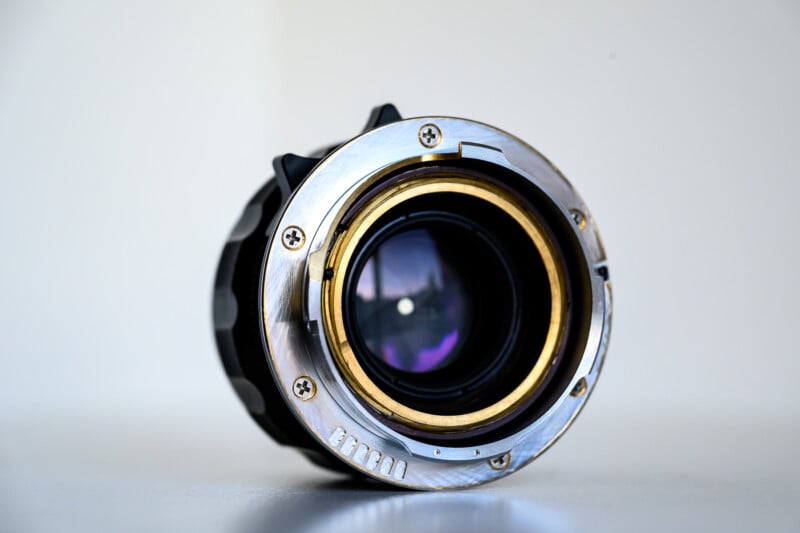
The Omnar 5cm certainly looks like a pre-war lens and is solidly built from brass. The version I tested came with a handsome black Cerakote finish, which will show beautiful brassing as the rugged finish wears off over time. It can also be purchased with a chrome finish and there is also a certain amount of customization that can be ordered. I love the classic look of this 5cm lens, but it also leads to my biggest critiques about it as well.

At the front of the lens, you’ll find the aperture ring, which has a very narrow knurled metal band to operate it. This is also cut for E39mm filters and comes with a machined screw-in brass lens cap. The main issue is that this rotating aperture ring is directly linked to the rotating focusing helicoid, which means that adjusting the aperture inevitably changes the focus as well. This means you have to habitually set the aperture first and then focus afterward and any change while shooting requires some dexterity to turn one ring while locking another.
You get used to it, but it is far from being ideal when shooting instinctually.


The focusing ring is machined in a gorgeous fashion, with a half-moon focusing surface exactly as you would find on most Leica lenses. This even butts up against a brass pin to stop the helicoid when the lens reaches infinity focus. The whole design is simple and classic. However, this beautiful brass helicoid is also completely exposed to the outside elements and covered in grease, so it will inevitably attract dust and grime over time.

The lens can also be a little difficult to mount and dismount, often requiring the focusing ring to be turned to one extreme or another before this process can be accomplished. Suffice it to say, I love the classic design and styling from a charming aesthetic perspective, but it does impose limitations on some practical aspects of the lens. Regardless, the machining and metal work are exquihttps://creatorkitdepot.com/, and the lens is still quite compact and lightweight at only 9.17 ounces (260 grams).

Omnar Bertele 5cm f/2 Review: How It Shoots
Before we get into the optical characteristics of the Omnar Bertele 5cm lens, I need to explain what is unique about the Omnar approach to vintage lenses. One of my favorite lens companies is Light Lens Lab, and it endeavors to faithfully recreate rare lenses using the exact same glass, coatings, and aesthetic design, to let modern users shoot with a lens that would otherwise be insanely expensive, or mostly found in museums.


Omnar, on the other hand, want to capture the character of the original optical design while also improving aspects of the manufacturing process using modern methods. This means using much harder scratch-resistant glass, eliminating air bubbles in between lens elements, incorporating modern multi-coating, and, most dramatically with this particular lens, a floating lens block assembly. This FLB seeks to maintain the effective focal length of the lens as the aperture changes and keep the sweet spot of the focus within the depth of field of the aperture being used. All of these modern additions have big ramifications for the images that this lens outputs.
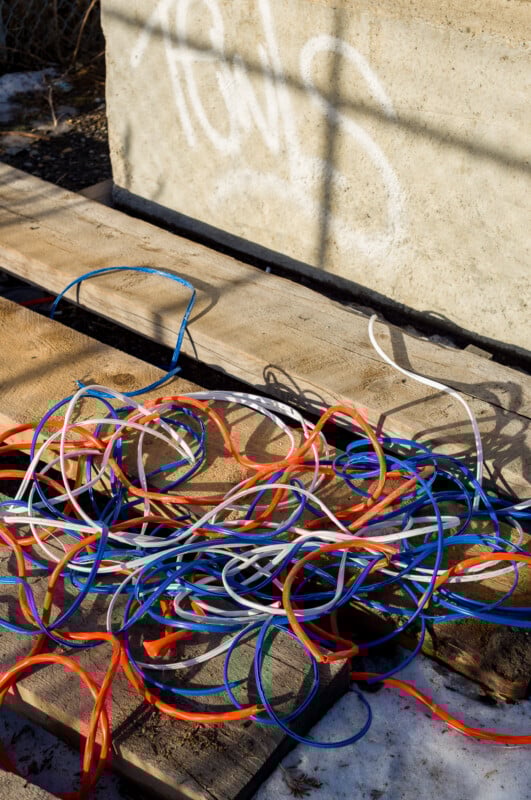


Flare resistance is a good place to start with this lens. I would normally expect a vintage lens to have heinous flare characteristics, but the Bertele 5cm handles bright sources of light surprisingly well. Ghosting is fairly well controlled at tighter apertures and usually only represents a subtle magenta tone across the images. Contrast and detail look vivid and clear as well.


The only caveat would be discovered when shooting at f/2. Bright sources of light will create a large and diffuse zone of washed-out light at the wider apertures, although this can be quite pretty if doing a backlit portrait, for example. Stopping the lens down quickly makes this effect go away. You can get an obvious rainbow reflection if bright light hits the front element at a very acute angle, so shading the front of the lens can be a good technique to use.


Perhaps due to the modern optical glass, chromatic aberrations and specifically longitudinal chromatic aberrations are minimal. Even shooting at f/2, I did not see much of the color fringing I would have expected in the out-of-focus areas of the frame. This is an excellent result for this lens, especially for color photography, and overall, I would say that the Bertele has a very modern look to the color and contrast of its rendering.


The bokeh is also an interesting story with this lens. The original design had real issues with the effective focal length changing, especially when using the middle apertures. This caused focus to be inaccurate in many shooting situations and would have been a source of major inconvenience for analog shooters, especially. The solution to address this was to use a star-shaped aperture opening to help mitigate this effect, but the downside was a very nervous and distracting rendering of the bokeh.


Because of the floating lens block apparatus employed by Omnar, this focusing issue is addressed, and therefore, the aperture blades can go back to being nice and round, which helps to restore a more pleasant look to the bokeh. I found the specular highlights to have a pleasant cat’s eye look at f/2 without being overly dramatic, and the highlights look fairly round when stopped down.
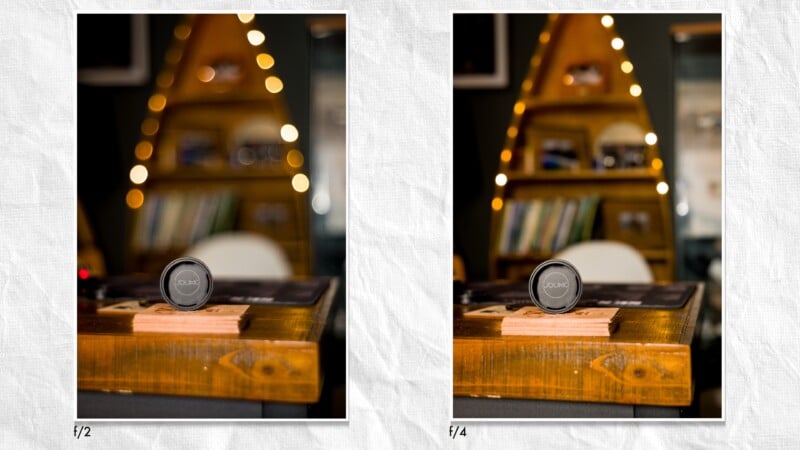
The rendering is clean but with a very distinct halo around highlights, which goes beyond a basic soap bubble effect. The lens can certainly separate subjects nicely from a background but I do find the look of the bokeh to be somewhat distracting and frenetic. There is a harshness to the background areas of the frame, which some users will find to be full of character. I personally found it unappealing in most cases. The bokeh definitely does not look modern, and many users will absolutely love it for that.


Sharpness is definitely where the Omnar 5cm shows its pre-war heritage, especially at f/2. There is a softness and lack of contrast across the entire frame, which gives the image a dreamy look. This is very common on older optical formulas and can even be used as an effect, almost like a diffusion filter over the image. Stopping the lens down to around f/4 gave a much cleaner and more contrasted look to the image, with nice detail in the center.

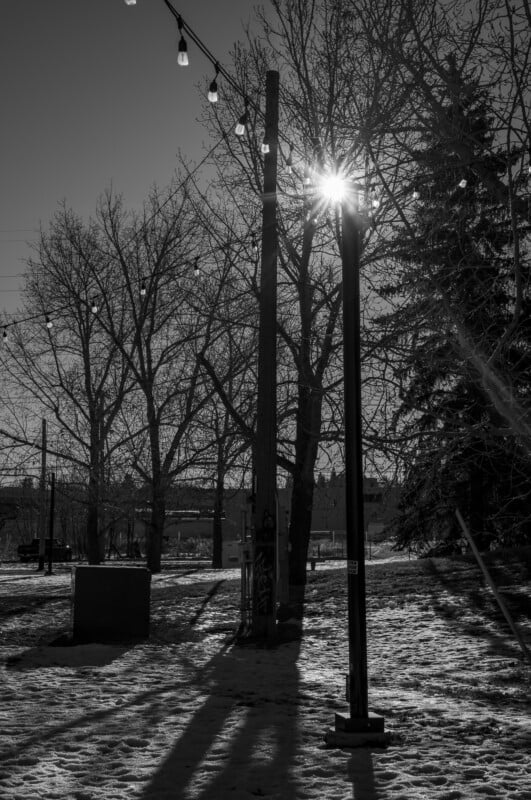
The corners are very rough though, with very obvious blur at f/2. Even at stopped-down apertures, the corners show as soft, and I would recommend using at least f/8 if you want to get decent corner sharpness. If I was doing street work, portraits, and nighttime scenes I would happily use f/2 to get a vintage look to my shots, and then go to much tighter apertures for anything where I want consistency or a more modern look to the shots.

What you wont see, even at the widest apertures, is much vignetting of the frame. In fact, this lens projects such a large image circle that you can use it on modern medium format cameras with full coverage. I did not test this myself, but I imagine that the corners would have quite a bit of vignetting and that the softness in the corners would be pervasive. Still, this might give a very characterful kind of look to your Hasselblad or GFX pics.
Omnar Bertele 5cm f/2 Review: Old and New
The appreciation of optical lens design is a beautiful thing to me because it is so often a nuanced and subjective pursuit. There are so many factors that can come together to make a lens more or less appealing to use, and these can entail handling and ergonomic concerns just as much as optical ones. However, modern lenses often lack much variation altogether, because they are all so good as to become homogenous. Modern technology has given us the best lenses we have ever seen, and any sort of differentiation is often incredibly subtle.

I think this is why vintage cameras and lenses are so popular now. And without going down to deep a rabbit hole, there is a certain beauty to be found within imperfect lenses. Using a lens that mimics the results we would expect from the very advent of 35mm film can be charming, but sometimes the inconvenience and optical issues that come with it can also take some of the joy away. I think the approach that Omnar is taking by revitalizing a classic formula but not being afraid to modify it heavily with modern technology is a very interesting one.

The Omnar Bertele 5cm f/2 lens gives you the character and rendering that a modern lens never could, while also taking away issues like poor flare performance or inaccurate focusing issues that plagued the early designs. In a way, Omnar gives you the best of both worlds while still staying true to the original heritage that inspired the design. If this sounds appealing to you, consider getting on the preorder list, because these lenses are made in very small batches and expect the price to start around that $3700 mark.
Are There Alternatives?
The Light Lens Lab company recreates some brilliant M-mount designs with an attention to detail, quality, and price, frankly, that is similar to Omnar. However, they seek to recreate the original lens flaws and all. Thypoch is another brand that is definitely more affordable, and tends to make lenses for M-mount that have a cleaner and far more modern look that aims to compete with current Leica glass.
Should You Buy It?
Yes. The Omnar approach of finding a balance between old and new is unique, and provides a balanced lens in an industry that other manufactures choose to avoid.
Editors’ note: Coincidentally, Omnar just launched its fourth (and potentially final) 5cm f/2 pre-order batch the day we published this review.