
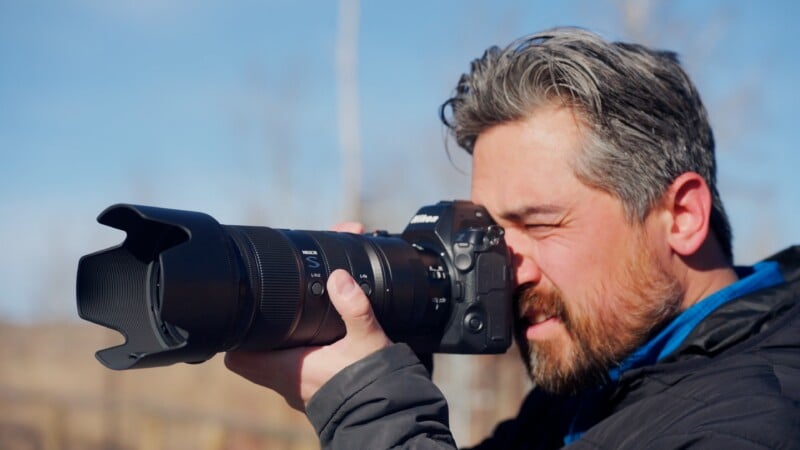
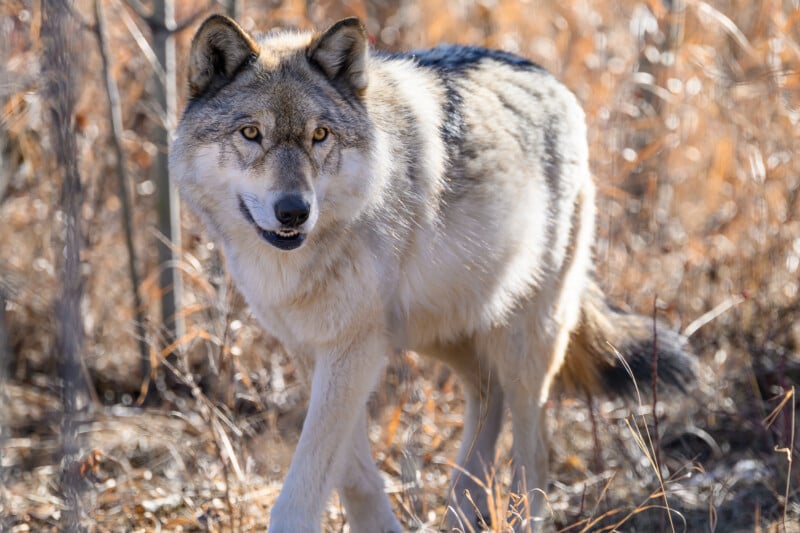
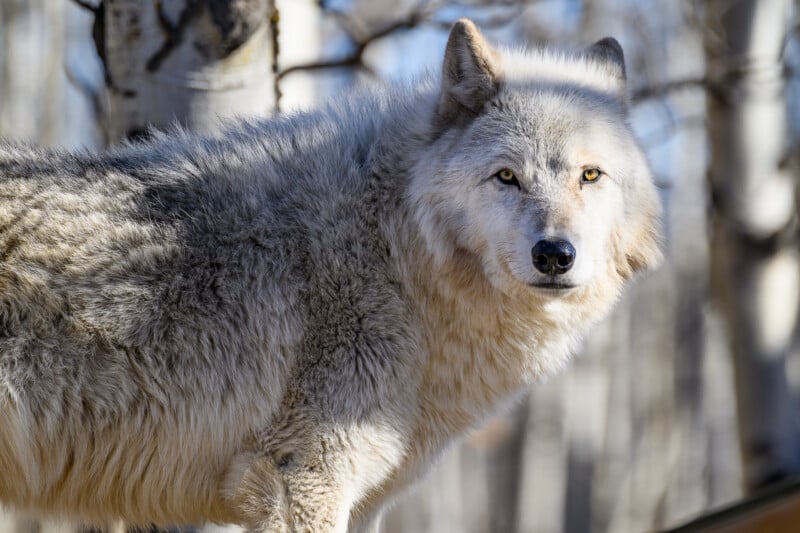
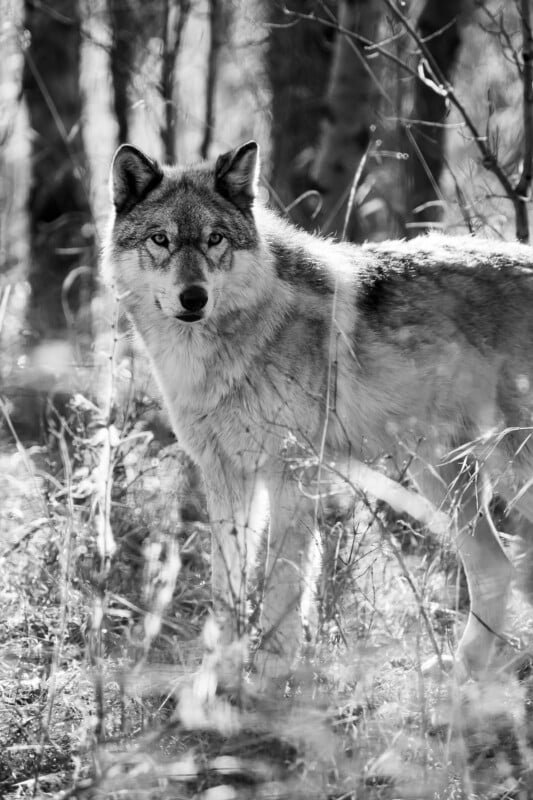
The Yamnuska Wolfdog Sanctuary is located just outside of Calgary, and does amazing work housing and rehabilitating these amazing wolf hybrids that often prove too much for owners to handle. We took the $3,199 pre-production Nikkor 70-200mm f/2.8 VR S II lens out to see how it handles this dynamic location.
Although it is sad that many of these beautiful animals become neglected or unwanted, the Yamnuska Sanctuary provides a natural outdoor habitat for them to live in, and it also gives photographers an authentic location to photograph animals that are up to 80 or 90 percent wolf. If you ever find yourself in the area, Yamnuska Sanctuary is well worth the trip.
Nikon 70-200 f/2.8 S II Hands-On First Impressions: Smaller and Lighter
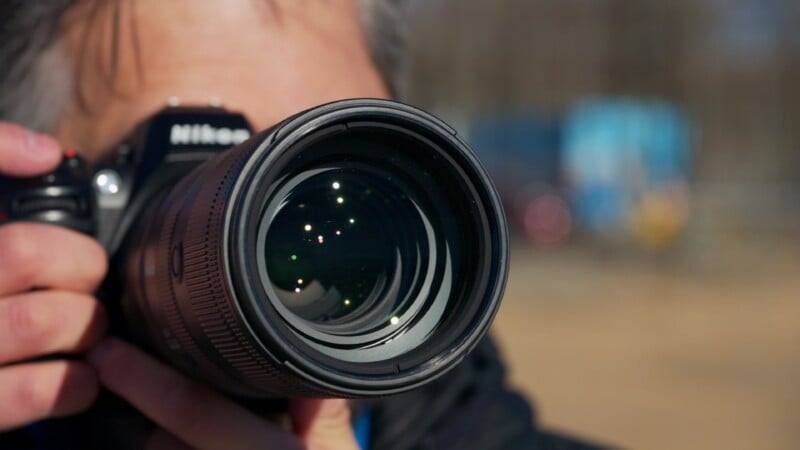
Walking around the sanctuary, I definitely noticed the new 70-200mm to be lighter than the first version. The lens comes in at about 41.6 ounces (1,180 grams) with the tripod collar attached, but I love that you can completely remove this collar and put on an alternate sleeve instead, which brings the weight down to a paltry 35.2 ounces (998 grams) without the extra bulk.
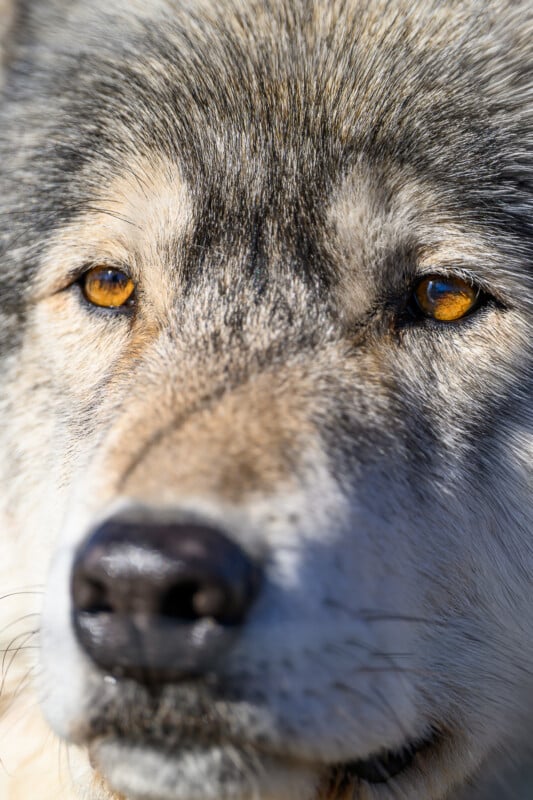
The tripod collar is also cut for Arca-Swiss-style tripod heads for added convenience. It’s important to state that this lens also takes the Nikkor teleconverters, and I committed heavily to the 2x converter for my time with the lens. I did this because we weren’t able to fully test sharpness because our sample was pre-production, but at least I would get a good idea of detail from my sample shots, and also because the wolf-dogs are in a natural environment and cannot be called to. The 400mm equivalent focal length out of the 2X converter was absolutely essential to get most of the tighter photos.
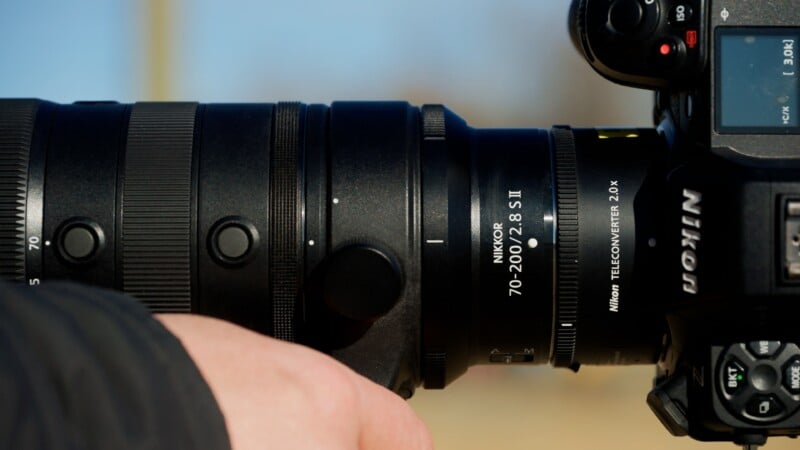
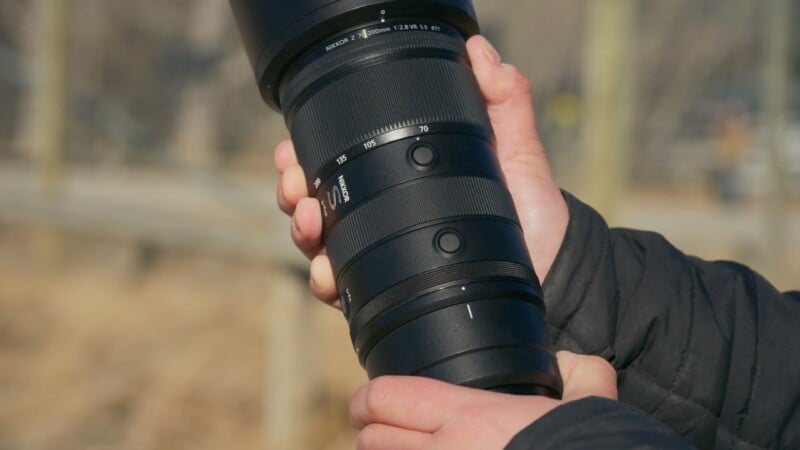
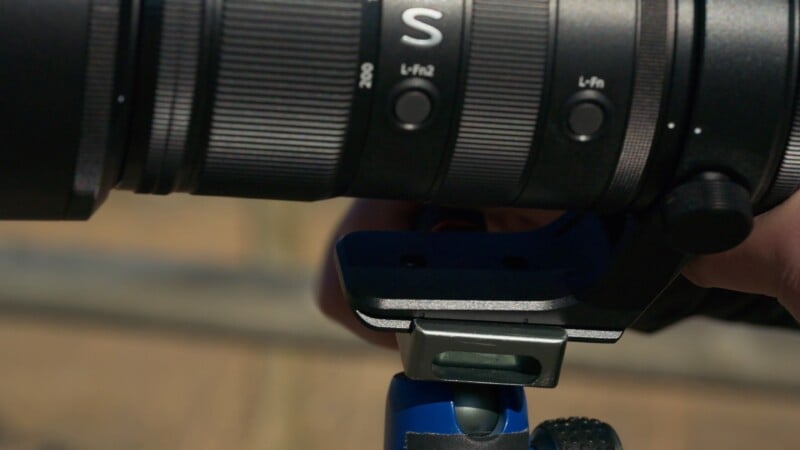
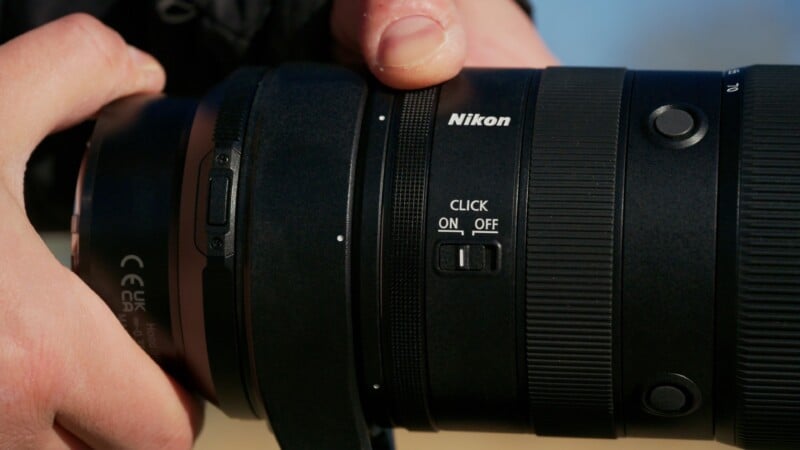
This is absolutely a professional-grade lens, so everything is tight and fully weather-sealed. There is a smooth manual focus ring, plenty of customizable buttons adorn the chassis, and the usual focus limiter and AF/MF are easy to locate. There is a customizable control ring as well, which I found very useful as an aperture control ring.
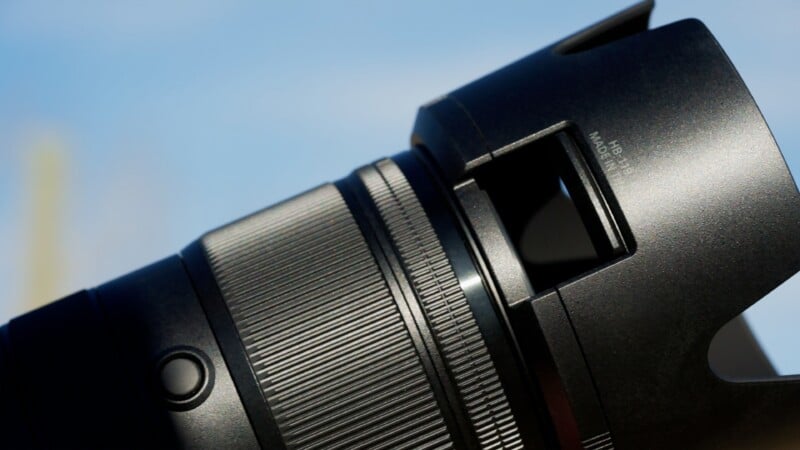
The hood has a push-button locking mechanism, and there is now a window to allow you to turn polarizing filters. You can mount any 77mm diameter filters to the front of the lens. The 70-200mm also includes image stabilization rated at six stops. All of these features fit neatly into a chassis that still manages to be 12mm shorter than the previous model.
Nikon 70-200 f/2.8 S II Hands-On First Impressions: Faster and Better
We couldn’t quite test everything on the lens due to its pre-production nature, but we still could test a fair amount, and autofocus speed was the main priority. The first version of this lens had excellent optical performance, but the autofocus speed really held it back. The stepping motor was not fast enough to compete with contemporary lenses. However, the new version uses a voice-coil linear actuator, and the speed is so much better. Nikon’s Silky Swift engine is just that in the new lens, with fast response times and silent functionality.
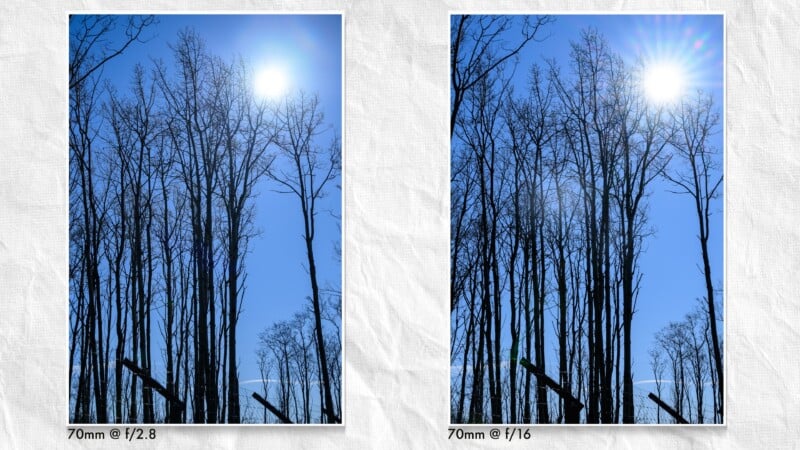
Nikon is throwing the gamut of lens coatings at this professional zoom with Nano Crystal coatings, ARNEO coatings, and the latest Meso-Amorphous coatings. It doesn’t matter what fancy jargon is being used here, because the flare control is excellent. There is no real loss of contrast shooting at f/2.8, and ghosting is minimal at tighter apertures. This lens will handle bright conditions and direct light sources without any nasty reflections or color washes taking away from the images. LoCA, or longitudinal chromatic aberrations, are also kept to a minimum, so you don’t have to worry about any color fringing in the out-of-focus areas of your images. Nikon is doing a great job at avoiding color issues with this latest lens.

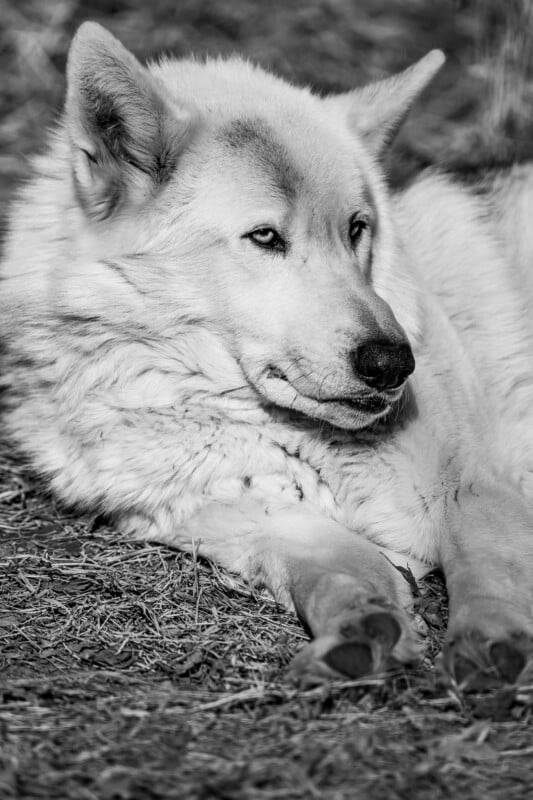
Close-up functionality does add to the overall versatility of this lens. You can get quite close at the 200mm range with tons of working distance and still get about a 1:4 macro ratio out of the lens. Go to the 70mm end, and you can get slightly closer with a ratio of about 1:3.3 at the expense of some working distance. For the occasional detail shot or tight portrait picture, this new lens can take care of you.
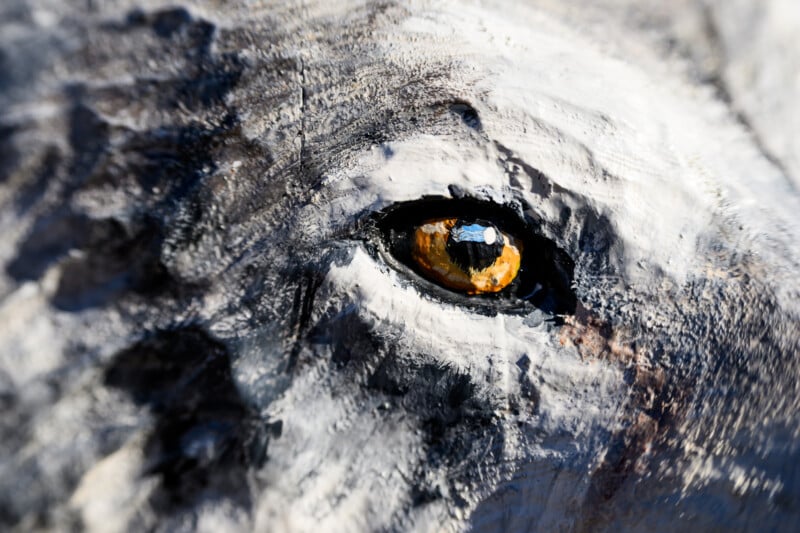
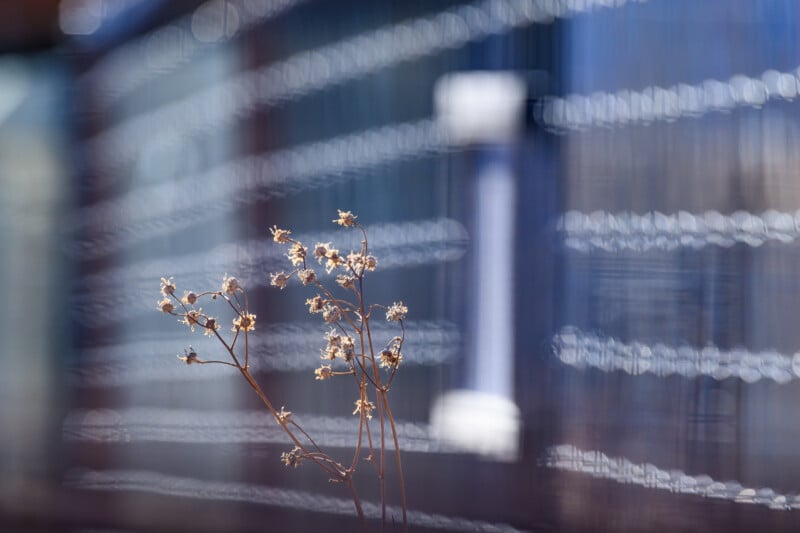

Bokeh is going to be an important feature for both action and wildlife, as well as portrait pics. The transitions look very smooth as the focus falls away, but I did notice some busyness in the specular highlights. You get a nice swirl effect at f/2.8, but the highlights have noticeable onion rings within. I did find the backgrounds to have a slight look of harshness to them, and I didn’t expect to see that. Stopping the lens down maintains nice round shapes with any highlights in the frame, and this lens is still very useful for shallow depth of field pictures.


Nikon 70-200 f/2.8 S II Hands-On First Impressions: Sleek and Expensive
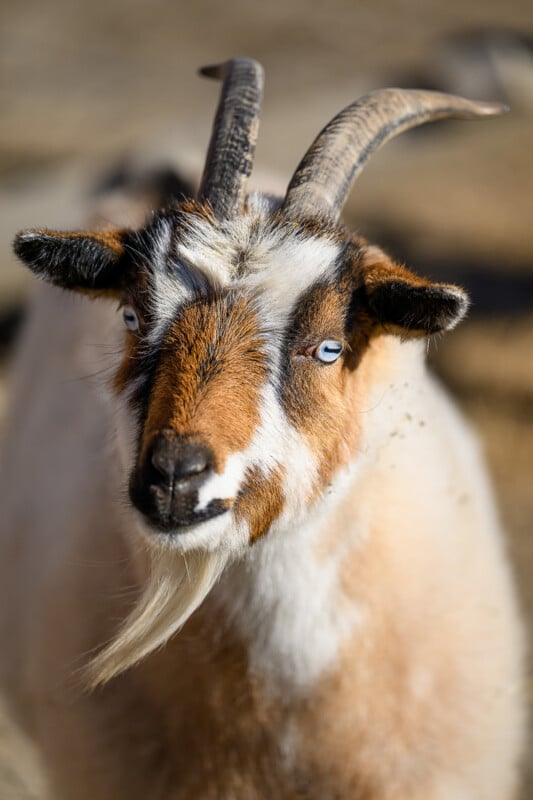
Nikon has made a beautiful lens and a worthy successor to the 70-200mm line. The autofocus improvement is huge, and I loved the more compact design of this new lens. Although we couldn’t fully test sharpness with our test charts, my sample images show that the detail and clarity are easily present.
Most of my shots were at f/5.6 through the 2x teleconverter, and I was still impressed by the level of detail, so I have no doubt that this will be a sharp lens. It’s also an expensive lens at $3,199, although this puts it mostly in line with the Canon pricing for a similar lens. In fact, it is the highest price we’ve seen so far for a Nikkor 70-200 f/2.8 zoom, which might very well push people towards the older version, or the more affordable 70-180mm f/2.8 option.
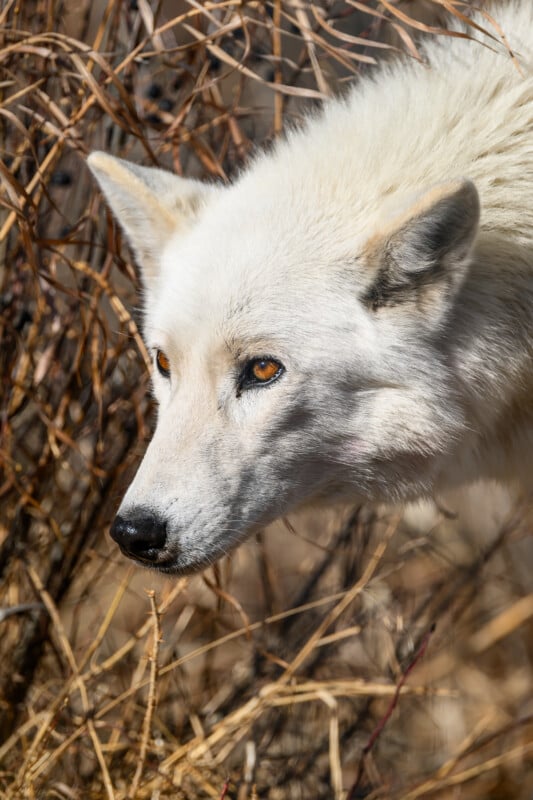
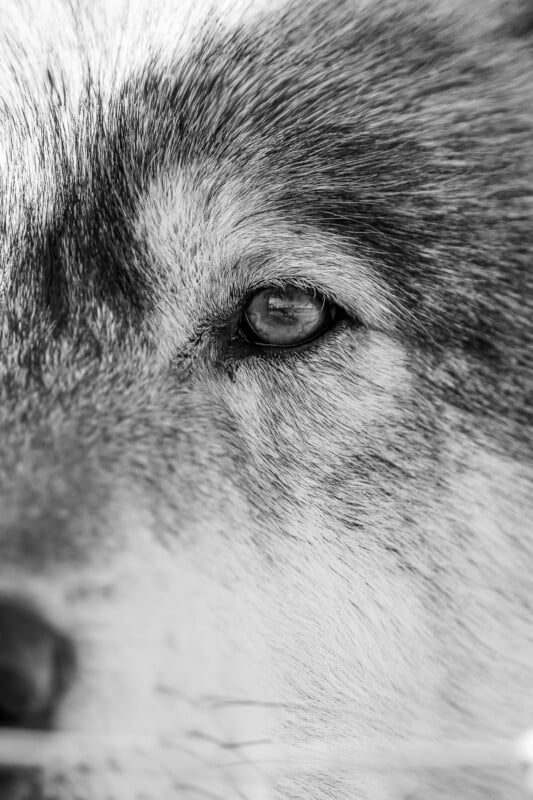
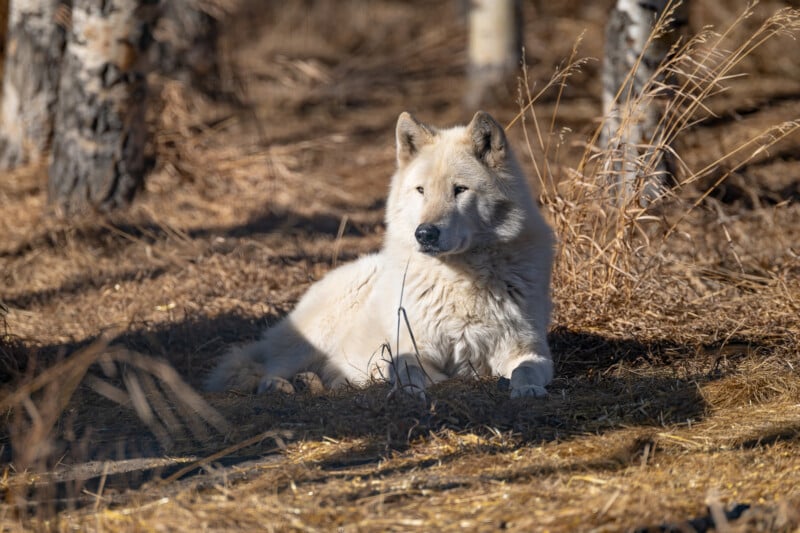
Regardless, I had a fun time using the latest Nikon lens offering, and it worked great as a general-purpose portrait and action lens. I don’t often get to test these lenses with teleconverters, so this was a great opportunity to see how the new 70-200mm could handle them. Part of the versatility of a professional lens like this is its ability to transition from a fast telephoto to a versatile super telephoto lens without more than a compact teleconverter in the camera bag. Nikon now has an updated and capable pro zoom, which should please the most ardent photographers.