
Like its flagships, Vivo focuses on mobile photography with its mid-range V Series, and the V70 aims to carry that torch. While not a dramatic shift, key moves with the user experience make this a likeable device for several reasons.
Granted, it’s not an ideal successor given missed opportunities, but it’s a good bargain in the $400-$500 range. Vivo’s fast product cycle for the V Series makes the V70 feel more like a lateral step than an upgrade.
Design and Build
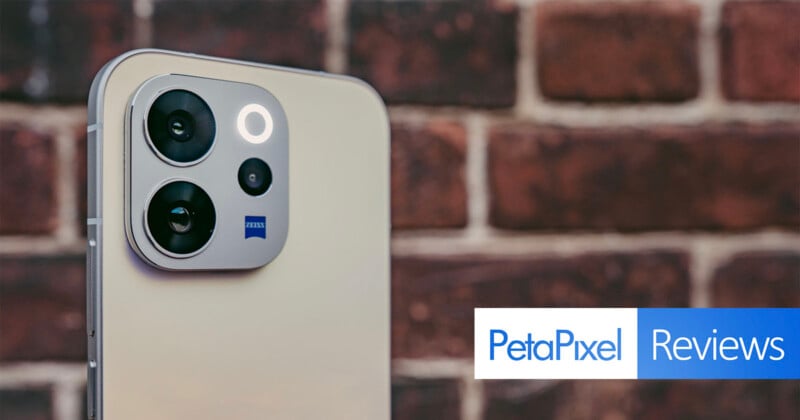
It’s interesting how various brands almost seem to copy each other when it comes to phone design. Vivo changed how the previous V60 looked compared to its predecessor in the V50, but the V70 does away with both and shifts into a squared camera module that seems to be in vogue these days. In doing so, it also reduces the size of the Aura Light fill light, though not necessarily its brightness or intensity.

The most obvious change off the bat is that Vivo brings back the telephoto camera to the rear array, further bridging the gap between the V70 and Vivo’s X Series flagships. At the same time, aluminum edges replace previous plastic ones, and from the back panel to the quality lenses, the V70 just looks more premium now. It also maintains tough durability with IP68/69 dust- and water-resistance.
The 6.59-inch AMOLED screen is trimmed down from the 6.77-inch panel on the previous V60, complete with a 120Hz refresh rate and HDR10+ support. Vivo also integrates a new ultrasonic fingerprint reader to replace the old optical one, and the efficacy shows when using it to unlock the screen. There is a catch with the refresh rate, though. By default, the phone switches between 60 and 90Hz under the “Smart Adaptation” setting, with the latter acting as the cap. Switch to “High,” and you can activate 120Hz for content that needs it. The problem is that not all apps and games respond to the change, even when manually whitelisting them. At least screen brightness is sufficient throughout.
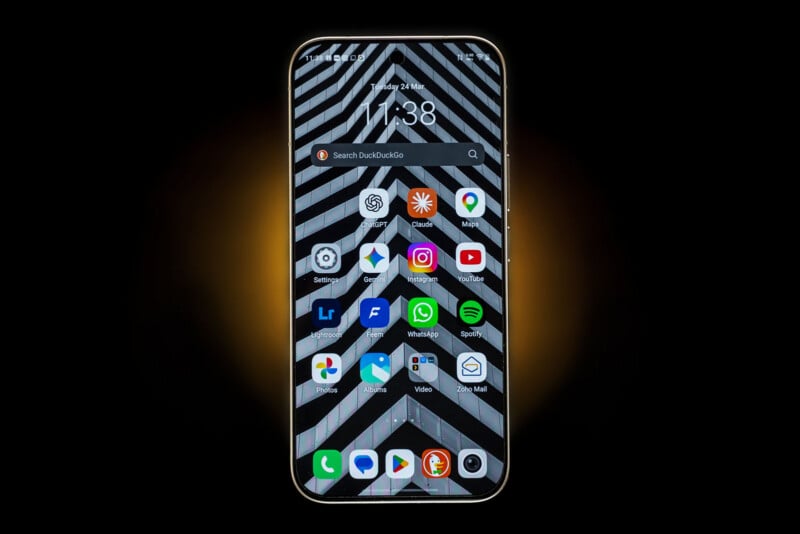
The V70 runs on the Snapdragon 7 Gen 4 chipset to align with the mid-range chops here. A sizable 6,500mAh silicon-carbon battery inside does a fabulous job keeping the device active for longer stretches. Still no wireless charging, which feels like a big miss at this point as more competitors deliver it, including Google with the Pixel A series.
My review unit came with 12GB of RAM and 512GB of storage, but there are variants lowering both numbers for an even lower price. Vivo also continues to offer Extended RAM as a standard feature to double the RAM by pulling virtual memory from the phone’s empty storage.
While my review unit had 12GB of RAM and 512GB storage, there are other variants starting with 8GB and 128GB, going up to 12GB and 256GB. There is eSIM support — unlike previous models — but you’re more likely to have success with one from carriers in Europe, Asia, and the Middle East. In North America, travel eSIMs will work fine but mileage may vary if trying to use it from a carrier. Physical SIM cards otherwise work.
Camera Features
The Aura Light has been a fixture on V Series phones for the last few years, but it’s been tamed here. Not only is it smaller and now integrated into the camera module, it also only emits light in a cool temperature. Previously, the ring light was more prominent, isolated in the back, and offered color temperature variances between cool and warm output. While still sporting strong brightness, it feels more like an ancillary piece now.
Instead, the focus falls more on Vivo’s continued partnership with Zeiss, leading to more emphasis on color science, processing, and editing than before. Still no Zeiss T* Coating on the rear lenses but it’s clear that this collaboration is spilling over further into the V Series.
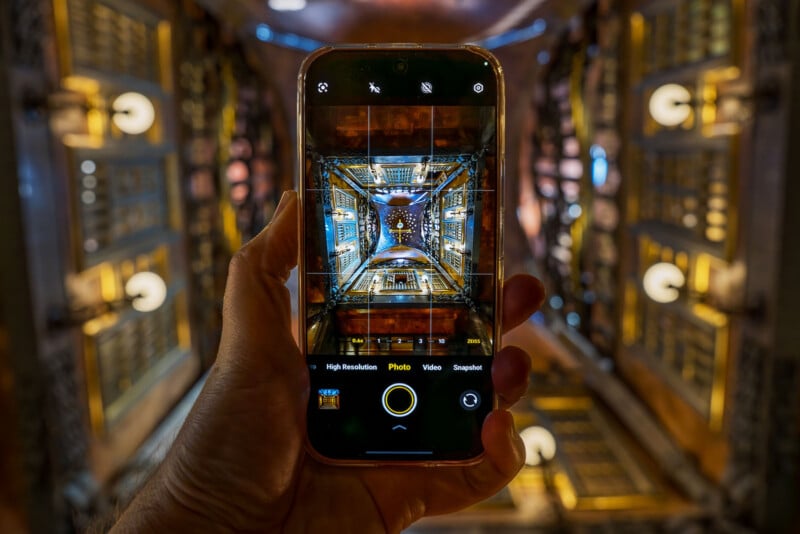
The 50-megapixel main camera (23mm equivalent) brings back the Type 1/1.56 Sony IMX766, a sensor that Vivo’s been milking going all the way back to the V40. The f/1.9 aperture remains the same, along with optical image stabilization.
The 50-megapixel telephoto (73mm equivalent) uses a periscope lens design with the Type 1/1.95 Sony LYT-600 sensor (IMX882) for 3x optical zoom at f/2.65 and optical image stabilization throughout. This is actually the same exact telephoto Vivo previously equipped in the X200 FE, a solid shooter that proved more than capable in capturing cool street and action shots.
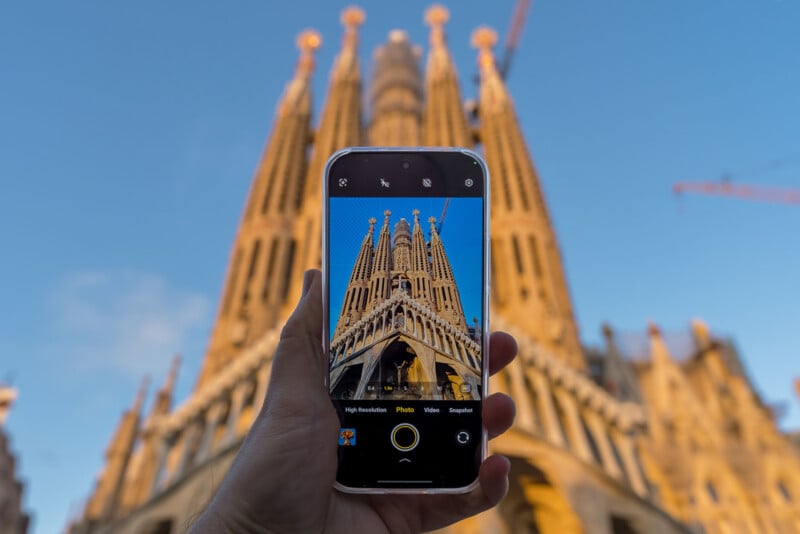
On the other hand, Vivo seems to treat the 8-megapixel ultra-wide (15mm equivalent, f/2.2) as a grudging afterthought by using the same OmniVision OV08D10 Type 1/4.0 sensor. This sensor goes back multiple generations in the series, and is a puzzling move for a brand looking to make a statement. Rounding things out is the front camera using the same 50-megapixel (20mm equivalent, f/2.0) Isocell JN1 sensor from before for the front camera. Here, too, Vivo is recycling the same sensor going all the way back to the V29.
Software Features
From the start, the V70 feels different because of OriginOS. Slicker, sleeker, and more intuitive, it puts the V Series closer in line with its flagship counterpart. I touched on my experience with it when first testing it in the X300 Pro, but suffice it to say, it’s a welcome change over the previous Funtouch OS overlay.
That’s the biggest software shift since the V60 hasn’t seen an update to OriginOS (which probably isn’t coming anyway). While Vivo runs a terribly fast product cycle for the V Series — too fast, in my view — this move to OriginOS is one of the best its mid-range phones can receive.

It doesn’t inherently change how the cameras function or even how the processing works. Only eight months removed from the previous V60, how much could radically change in such a short time, especially when the camera hardware barely budges? The good news is the V70 is working off a solid baseline, such as it is. While the ultra-wide shows its weaknesses quickly, the main and telephoto cameras can deliver good results.
You get the usual photographic styles to choose from: Zeiss, Vivid, Texture, and B&W. Portrait photography sees less emphasis in the V70 than past models because the Aura Light isn’t the main draw anymore. You can still use it with some success, including with plenty of different styles and virtual bokeh control, but it won’t necessarily feel like it’s taken any forward strides.

Film Camera mode also returns as another stalwart carried over from past models. I first touched on this in my V50 review, and not a whole lot’s changed in what it can do. Swipe up from the bottom of the camera app to reveal a separate interface that emulates Polaroids and other borders to apply to photos captured within it. You have to use this independently to get the effect, as there is no way to apply it when editing an image in the Gallery afterward.
Image Quality
I can’t say there’s much that surprised me after testing the V70 for weeks in multiple locales. The imaging pipeline still does great work, and while soft pixels are clearly evident when peeping pixels, this phone can capture shots that look good on a phone or tablet screen. It’s just that after a year, with this being the second iteration since, it leaves me wondering why Vivo didn’t just wait and make this phone the V60 instead.


Vivo’s penchant for excellent color science and dynamic range with exposed light is still world-class. That doesn’t really change here. Whether it’s broad daylight or challenging low-light conditions, the V70 is capable of delivering a satisfying result, one that would likely surprise someone using a phone at a comparable cost.
A big reason why is the versatility Vivo brings to the wider system. It’s possible to get similar action shots made possible by the X200 FE, as well as dynamic range that competes with anything in the same range, considering the trade-offs and stagnation presented by the camera hardware specs.


Despite that, a big catch for me is how much I can trust a phone to take photos when I don’t have my mirrorless with me. The V70 earns it from me most of the time, but I would like to see Vivo instill some renewed vigor in the V80 by pushing the hardware envelope more. The ultra-wide is simply not good enough at this stage, though I appreciate that it still has autofocus, which was missing in past models.

One of the biggest gems is Snapshot mode as a means to freeze action. With the telephoto, in particular, it works more like the X200 FE as a reliable camera to keep the subject focused. When using it, I tap the shutter button repeatedly to both ensure I get the right shot but to also avoid the escalating ISO ranges that tend to happen when shooting in burst. Mind you, that won’t happen in bright conditions but it’s a trick I’ve learned while testing several Vivo phones over the years.

Long exposure is conspicuously missing from the expansive options available here, which is a shame. The phone’s hardware and software are more than capable of running it, as proven by past V Series phones, yet Vivo chooses to leave it out here. At least there’s an Underwater mode that disables the screen’s touch features and utilizes the volume buttons to take photos, record video, and switch lenses.
Telephoto
As is often the case these days, the telephoto lens can easily become the go-to. Fortunately, Vivo equips the V70 with a dependable one that proves capable in a variety of situations, including some impressive hybrid zoom results. Sticky focusing and excellent image stabilization help the cause but a methodical approach never hurts when capturing from distance. The tight aperture makes things tougher in low-light conditions but that’s also where dynamic range processing helps pick up the slack. The problem is pixels just get mushy the more you zoom in, regardless of lighting, effectively falling off a cliff soon after you introduce a digital element to the mix.


Like the main camera, the phone takes pixel-binned 12.5-megapixel images unless you use High Resolution mode. It’s your only full-res option since Vivo still won’t allow full-res RAW image capture in Pro mode.
Video Features
Such a quick succession of models in one series makes it hard to do more than max out what’s already been done, and that’s pretty much the story with the V70. That’s not a bad place to start from what Vivo did with the V50 and V60, which explains why footage looks good from both the main and telephoto cameras — so long as you generally stick to the optical lengths. Things shift badly when hybrid zoom kicks in.
Pro mode doesn’t offer a video section, nor is there a separate manual video mode. That means no 24fps recording, no HDR recording, and no Zeiss styling. Throw in the neutered Aura Light and it’s hardly a step forward for the V70. You can record in 4K or 1080p at 30fps or 60fps. If you want 120fps slow-motion, you need to use Slo-mo mode for that. Dual View also returns to record from two of the cameras at the same time.
Vivo V70 Review: Not Radically Different but Still a Very Good Mid-Range Phone for Photographers
One of the biggest knocks against the Vivo V70 is that it doesn’t do much to separate itself from its predecessor, the V60, that released well under a year ago. However, what was good about the V60 then remains good about the V70 now, including its solid array of cameras and photo features.
The ultra-wide camera is imperfect, but the main and telephoto cameras are very good, especially for the V70’s accessible price point.
The move to OriginOS is a welcome one, and perhaps that alone is enough to separate the V70 from its predecessor. Even so, it’s a strong mid-range handheld that has a lot to offer photographers willing to veer off the well-trodden path of the major manufacturers.
Are There Alternatives?
Given what Vivo has done here, the V60 feels like a very viable alternative — save for the fact it’s stuck using Funtouch. OriginOS gives the V70 a clear edge in my book. Same with the X200 FE, which is fabulous, though also mired in a software purgatory of sorts. A more impactful competitor might be the Oppo Reno 15, though paying extra for the Reno 15 Pro may be worth your while given how effective the camera array is.
I would say the same about phones like the Xiaomi 15T and Tecno Camon 50 Ultra. There are no shortage of mid-range phones available now, with a recent flurry adding to the mix. If you can find a OnePlus 13R, it’s a solid choice despite launching over a year ago. The Nothing (4a) Pro is an intriguing option that’s proven capable as I’ve been testing it — and it’s got a telephoto camera.
Not all alternatives do. The Google Pixel 10a is an even more egregious example of standing pat on the camera side compared to the previous generation. I would expect the next Samsung Galaxy mid-ranger to fall in a similar boat. The iPhone 17e only gives you one rear lens, so is not aimed at anyone serious about mobile photography.
Should You Buy It?
Yes, if you’re on a budget and want a better OS experience. It’s not a phone you can easily get in North America but it will work here (just no carrier support apart from a physical SIM), while it’s more widely available in Asia, Middle East, Europe, and the U.K.