
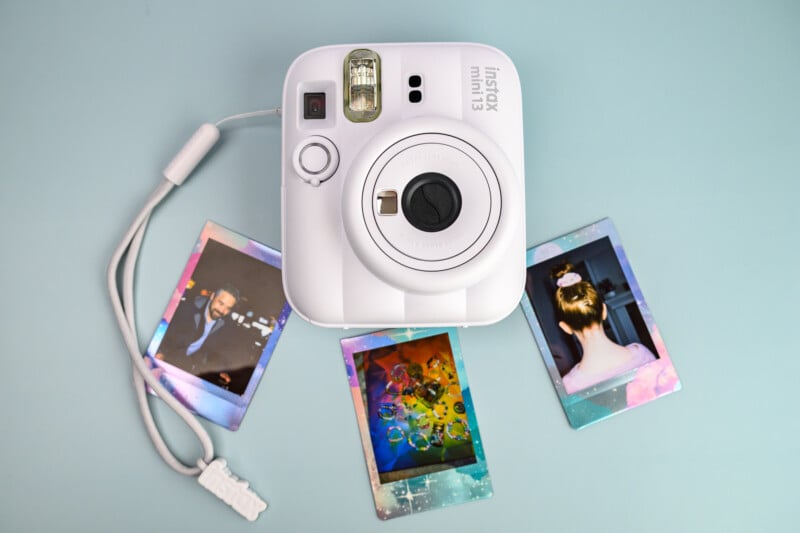
I’ve reviewed my fair share of Fujfilm Instax cameras. Most recently, I played with the creatively powerful Instax Mini 99 and the entry-level Instax 400 Wide for those who want bigger pictures. However, it has been a long time since I’ve tested the most basic of Fujfilm Instax cameras. The latest iteration is the new Instax Mini 13, and I felt that I could test it with a fresh perspective.
Fujifilm Instax Mini 13 Review: How It Feels
A fresh perspective is a good thing, too, because not much has changed since the earlier Mini 12 and Mini 11, and if I had reviewed those previously, I might have found the Mini 13 to be an underwhelming improvement. Make no mistake, these are at their core the same very basic cameras, but the target audience is not the advanced photographer:
This camera’s appeal to a younger or more casual crowd is evident in the design of the Mini 13, which comes in fun pastel colors, has a rounded and pillowy look, and only costs $94. Rotate the lens barrel to any setting other than off, and you are ready to shoot.
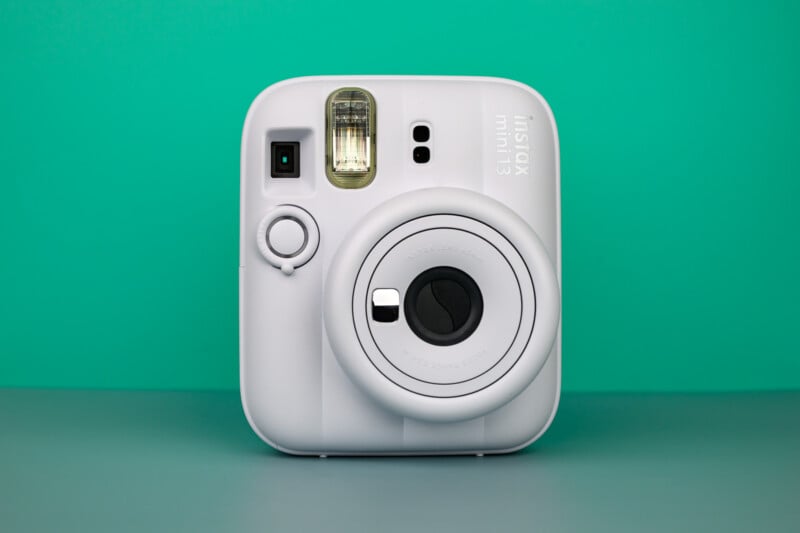
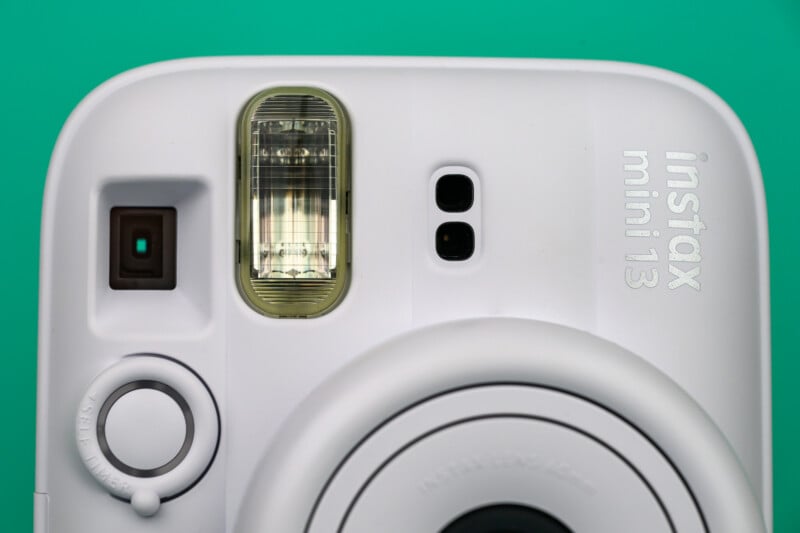
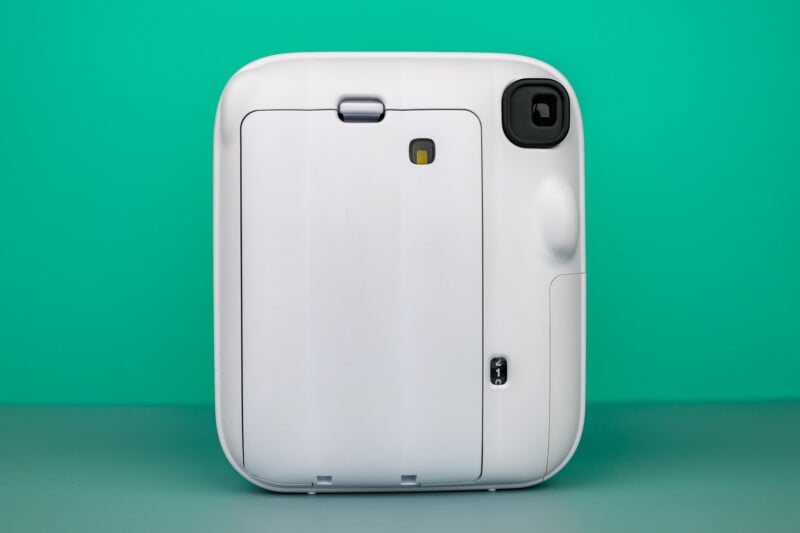
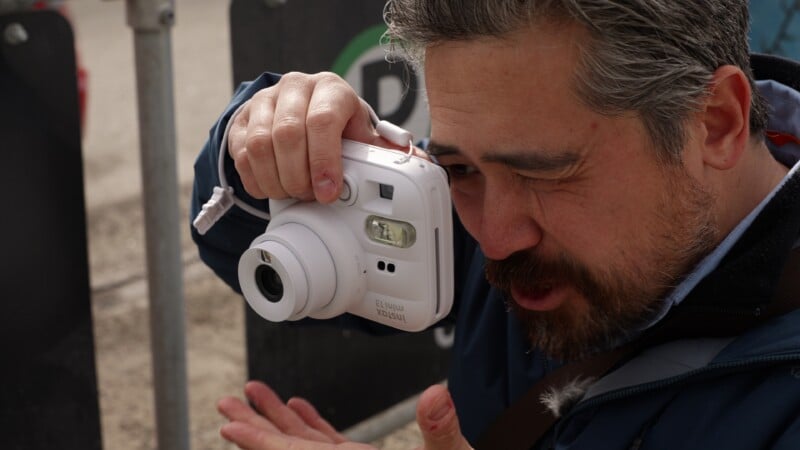
The design is essentially identical to the Mini 12 camera and is primarily designed for vertical pictures, although you can crane your hand over the camera for the occasional horizontal frame. It’s quite easy to hold this camera despite its bulk (film requires it to be a certain size), as it weighs only 10.8 ounces (306 grams).
The camera takes Fujifilm Instax Mini film and has a countdown counter to let you know when it’s time to change packs. Throw a couple of AA batteries into the camera, and you are ready to go.

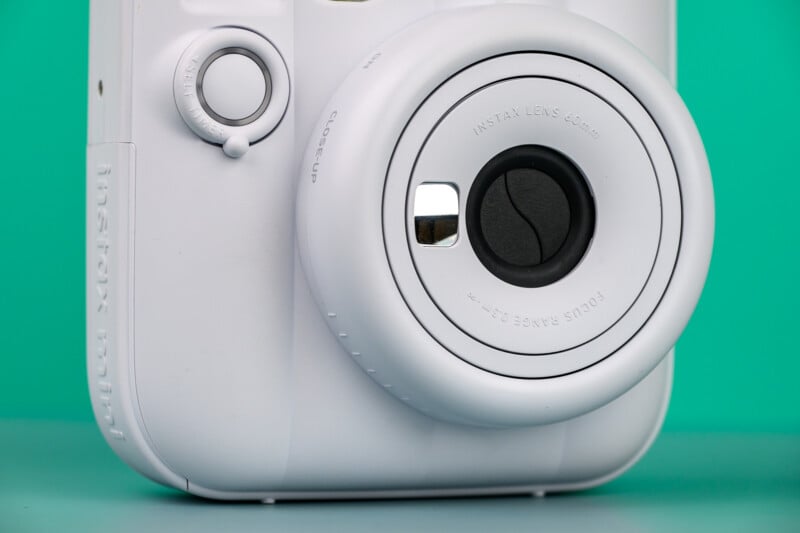
The same 60mm f/12.7 lens makes a return from pretty much every other Instax Mini camera that came before. Image quality is not the chief concern, and that’s a good thing since the photo quality is relatively poor. However, when viewed at the compact size of print that is the Instax Mini format, the images do have a charming appeal.

Fujifilm Instax Mini 13 Review: How It Shoots
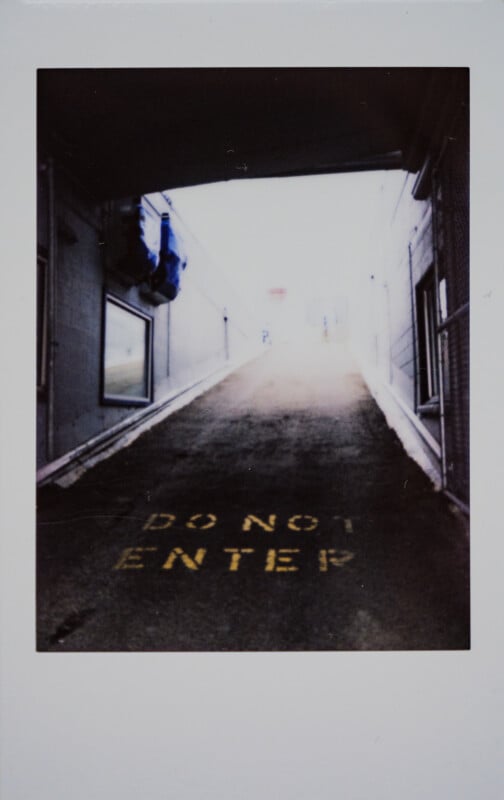
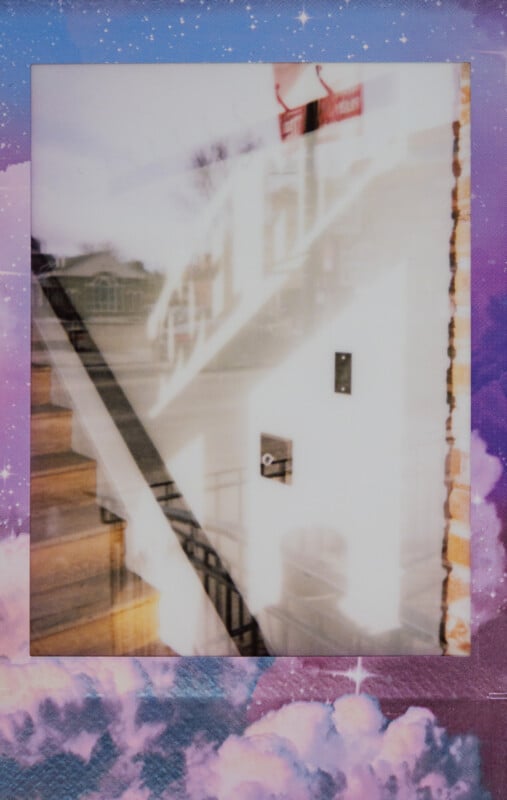
There are no manual controls to speak of and no way to control the exposure of the built-in flash. Everything will be handled for you, which is part of the appeal, but I find that Fujifilm Instax film often comes out overexposed and washed out. I always like to underexpose Instax slightly, but that is not an option here.
That means exposure is okay for the most part, especially with the electronic flash indoors, but the flash only exposes subjects that are fairly close to the camera. Unlike the digital Instax cameras, there is no way to preview your images, so you will waste multiple frames to get the shot you want, and the costs add up quickly.
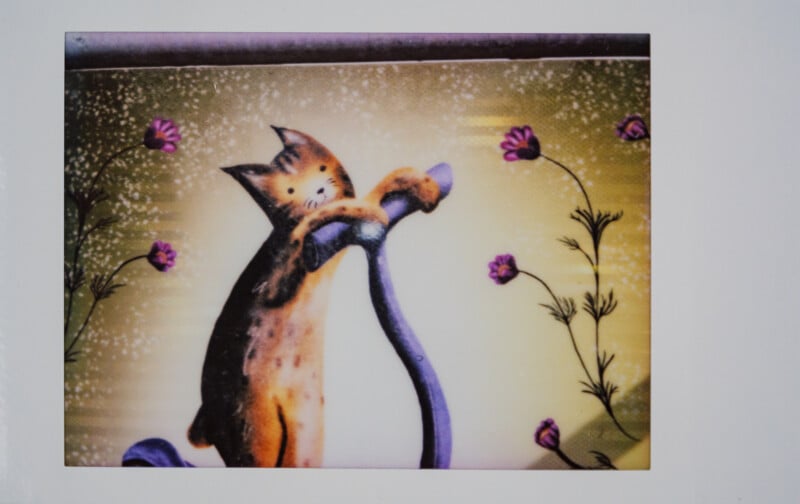
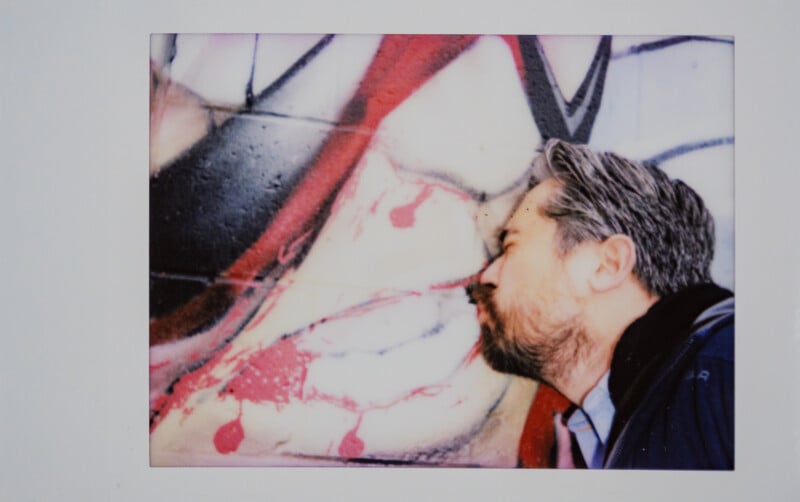

I am happy, though, with the viewfinder framing. On the Wide 400, I was often frustrated by the frame that I saw through the viewfinder and the frame that I got on the print. Luckily, the Mini 13 is quite accurate with selfies, close-ups, and standard framing. This is a huge benefit, because I wasn’t wasting expensive shots trying to get the right frame.
Selfies are easily accomplished by using the small mirror at the front of the lens, and the viewfinder is easy to find with your eye. It is very important that you set the camera to the close-up distance for shots from one to two feet from the camera, and to the regular setting for anything else. Failure to remember to set this will cause unnecessary soft focus in your images.


The main feature improvement in the Mini 13 is the addition of a self-timer function. Right around the shutter button is a lever that you can pull for either two second or ten second delays. However, Fujifilm failed to add any sort of tripod thread to the camera body. This seems like a huge misstep, and means you will largely be looking for table tops and electrical boxes to place the camera upon. You can buy separate weird tripod adapter clamps to use a tripod for group shots and timer selfies, but you shouldn’t have to. The Mini 13 has a rubber wedge attached to the strap, which you can prop the camera up with to get your frame, but it means that many of your group shots will be from an awkwardly low angle, and I foresee a lot of crouching down to the table to somehow place your eye properly to get the frame right.



Fujifilm Instax Mini 13 Review: Simple and Straightforward
There isn’t much to say about the Instax Mini 13 because it is intended to be so simple. This camera isn’t made for me because I desire more control and more features. If you have the same perspective, for roughly double the price, you can get the Mini 99, which will give you manual control and fun filter effects.
For fifty percent more, you can get the Wide 400, which is still very basic, but adds tripod threads and self timer controls, and provides the larger frame size of a classic Polaroid camera.
However, if you want the most basic way to get into the Instax Mini line, keeping the cost under $100, and enjoy the fun design and point-and-shoot simplicity, the Mini 13 will do exactly what it promises.


Are There Alternatives?
I would seriously look at grabbing a Mini 12 model if you can still find one, because the price should drop. It is the same camera without the self-timer. There is an even more basic option of Instax camera, which only provides fixed focus called the Mini SE, but I would say that extra limitation makes it even more frustrating.
If you want a similar camera with more sophisticated styling, the Mini 41 is a good choice, but it lacks the self-timer function of the new Mini 13.

Should You Buy It?
Yes. This is a simple continuation of the insanely popular Fujifilm Instax Mini line of cameras and is adorable for the same reasons that the previous models were. Just don’t expect any life-changing improvements from the previous model either.